The National Center for Higher Education Development Participated in the First Peer-learning Activity within the ARAQUA 2 Project
On 22–23 April 2026, the first Peer-learning Activity within the ARAQUA 2 project entitled “General Principles of Automatic Recognition of Higher Education Access Qualifications” was held in Yerevan, Republic of Armenia.
The event was attended by representatives of the National Center for Higher Education Development of the Ministry of Science and Higher Education of the Republic of Kazakhstan: Ms. R.Zh. Kunakbayeva, Head of the Financial and Economic Office, and Ms. G.S. Bekmaganbetova, Expert of the Internationalization Office.
The activity was hosted by the National Information Centre for Academic Recognition and Mobility of Armenia (ArmENIC) and brought together representatives of national recognition centers, quality assurance experts, and academic recognition specialists from the project partner countries.
During the event, participants were introduced to the Armenian education system with a focus on higher education access qualifications, the main objectives of the ARAQUA 2 project, and other European initiatives related to automatic recognition. Discussions also covered the Council of Europe’s perspective on automatic recognition, as well as the concept and key principles of automatic recognition of qualifications granting access to higher education.
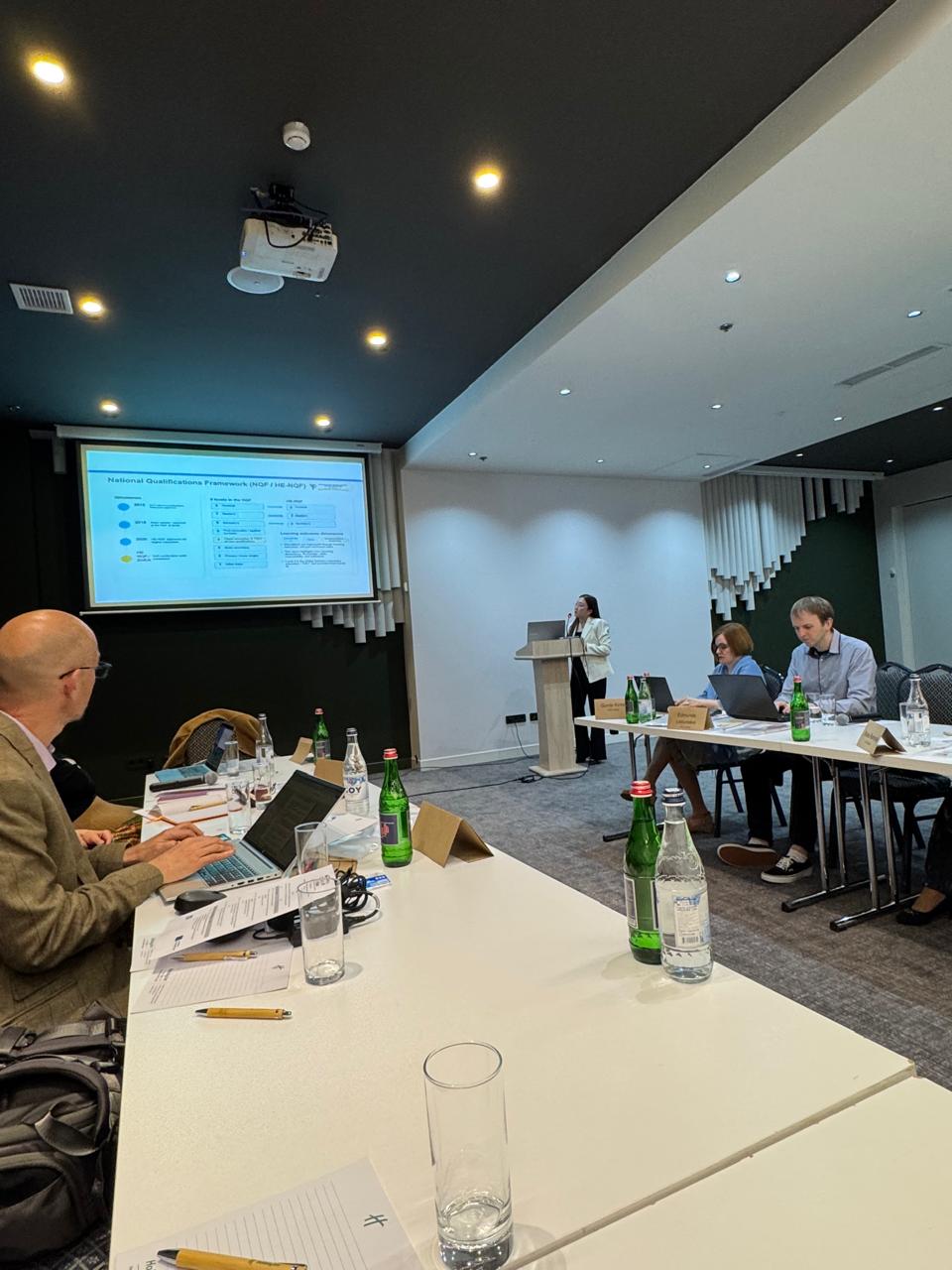
Particular attention was paid to the national experiences of the project partner countries, including Bosnia and Herzegovina, Georgia, Kazakhstan, and Serbia. Representatives of Kazakhstan delivered a presentation on the education system of the Republic of Kazakhstan, the National Qualifications Framework, and the qualifications granting access to higher education institutions. The presentation highlighted the main educational pathways, qualification levels, and existing mechanisms ensuring access to higher education in Kazakhstan.
In addition, participants discussed the importance of information transparency and qualification databases in automatic recognition procedures. A separate session was devoted to quality assurance issues, featuring the experience of the National Center for Professional Education Quality Assurance Foundation (ANQA) of Armenia.
Participation in the event facilitated the exchange of experience among partner countries, provided insights into European practices in the field of automatic recognition, and contributed to further strengthening cooperation within the ARAQUA 2 project.
#NCHED #ARAQUA2 #AcademicRecognition #HigherEducation #InternationalCooperation #ErasmusPlus